Table Of Content
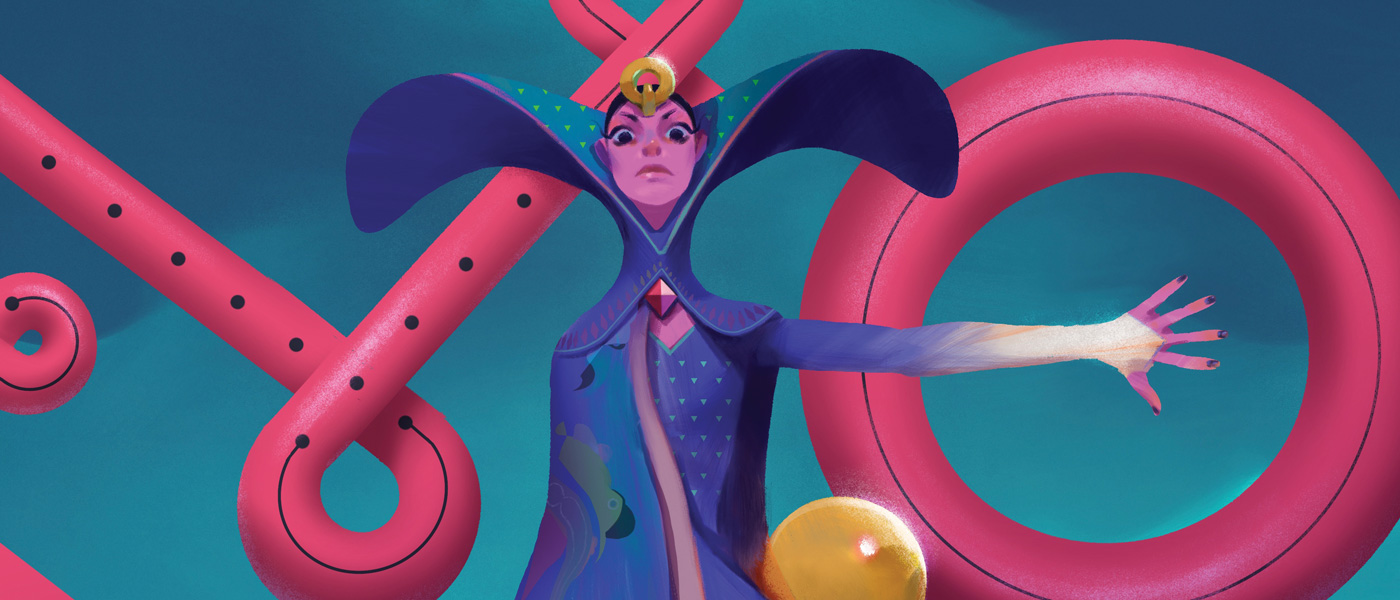
The design has to evoke who the character is and that means the designer must be skilled at using nonverbal, visual elements such as expression, gesture, color and clothing to communicate personality traits. This is especially true for simplistic character styles, where the designer has to communicate more with less. She offers a ton of sketches and digital paintings along with advice on analyzing subjects, selecting colors, and knowing when to abandon or refine an idea.
Portrait of a Woman: Art, Rivalry, and Revolution in the Life of Adélaïde Labille-Guiard
Unfortunately, there’s not always a straightforward way to know whether you’ve chosen the right destination. Creating art is a process of blind feeling, aesthetic judgement and trial-and-error. It is often up to the illustrator to interpret the brief, ask the right questions, read between the lines, and distill the client’s explanation into core character traits. Your ideas should not contradict the brief, of course, but keep in mind that you were hired for your expertise. In many cases, the client will be expecting you to expand on the concept in novel ways that will not have occurred to them.
Character Design Quarterly - Sample Issue 2019 (Download Only)
Juan Useche shows us how age can affect a character design, and Bertrand Todesco combines time travel with the Wild West to stunning effect. Also in this issue, we ask Sara Paz about her art, careers, and advice for budding artists. Ben Eblen creates a character from a simple prompt, and Alex Jensen shows us how to design a cast of superheroes. With so much to explore, there’s something for everyone inside this issue of CDQ, no matter your skill level or experience. Character design might look like artistic magic, but it actually involves thought, experimentation and hard work to get a successful result. While the steps we’ve laid out here can help give you a starting framework to develop your character designs, it takes time and practice to hone your skill as a character artist.
Character Design Quarterly issue 14
Diablo IV Quarterly Update—December 2021 — Diablo IV — Blizzard News - Blizzard News
Diablo IV Quarterly Update—December 2021 — Diablo IV — Blizzard News.
Posted: Mon, 20 Dec 2021 08:00:00 GMT [source]
The purpose of this sketch is to guide your final artwork, so it is going to get harder to make any big changes to the design from here on. Cross The Lime summarizes, “It is even more important that you keep a clear silhouette in mind when designing. Have ears, head shape, position of arms clearly defined, so that you can recognize the character even when it is just the silhouette.” If you have not done so, it’s a good idea to brush up on shape language. This, (in addition to color later on) is a primary visual way to communicate traits and emotions such as stability, danger, or innocence.
Eduardo Vieira composes a quartet of distinctive characters with an intrinsic connection – heavy-metal music! Combatting stereotypes is tackled by Anthony Wheeler, and Jens A. Larsen Aas has advice on strengthening characters through simple stylistic effects. Discover informative insights into the entertainment industry as Dani Diez, Elsa Chang, and Dirk van Dulmen discuss their creative practices.
A client will typically provide audience information in the brief, but you’ll want to do research beyond demographics such as age, gender, location, etc. Look up other artists who design for that target audience, and the types of styles that appeal to them. But while the client (or writer) may have already created a story for the character, that does not let the artist off the hook. Briefs are by their nature, well, brief, and it’s not uncommon for a client to have trouble expressing themselves in artistic terms.
Diablo 4 Quarterly Update Unleashes New Character Art And Footage, Including Rogue And Barbarian Classes - PlayStation Universe
Diablo 4 Quarterly Update Unleashes New Character Art And Footage, Including Rogue And Barbarian Classes.
Posted: Thu, 01 Jul 2021 07:00:00 GMT [source]
Study an in-depth tutorial by Jefrain Gallipoli and learn to effectively develop a character whose appearance perfectly encapsulates the feeling of amazement. If you are looking to begin with the basics, listen to Tom Hänni as he speaks the language of shape, and offers tips on how to loosen up and get started. For aspirational experience, advice, and masterful artwork, peruse interviews with versatile creator, Patrick Schoenmaker, imaginative children’s book illustrator, Lina Dūdaitė, and renowned Disney veteran, Armand Serrano. You can find reference material from virtually any source—Pinterest, Google images, ArtStation, Dribbble, even your own camera roll.
Character Design Quarterly issue 16
Working non-destructively in a separate color layer will also allow you to experiment. When you’re ready to paint in your colors, use a blend mode such as “Color” in Photoshop in order to tint your value tones with the appropriate color. But I can tell you what it offers and share my thoughts on who would most enjoy this content. Our CDQ subscription schedule has the expected timetable of CDQ releases, according to your active subscriptions.
Character Design Quarterly - Sample Issue 2021 (Download Only)
In addition, researching the work of other artists on similar concepts or designs for similar audiences can also help you see what is common and how your character can be different. Character Design References (CDR) is an online platform that celebrates and showcases exceptional character-focused art within the realms of animation, illustration, games, and comics. It stands as a vibrant hub for the largest community of character designers on the Internet, uniting over 1 million artists, art enthusiasts, and animation fans from across the globe. Elsewhere, we interview the founders of MUTI, a studio of illustrators and designers based in South Africa, and showcase their contemporary artwork. We also catch up with Annie Award winner Amanda Jolly about her impressive career in character design, working for clients from Sony to WAG, to Disney and now Netflix Animation.
Every page is packed full of artwork from a wide variety of artists and there’s so much to glean from every issue. If you’re looking for artistic inspiration and practical advice then you’ll enjoy the subscription. CDQ primarily targets intermediate-to-advanced artists who want to improve their artistic design skills. The interviews are super fun to read and they’re full of valuable tips for artists.
Kenneth Anderson shows us how he created this issue’s colorful cover art, and speaks to us about his inspiration, career, and more. Learn how to redesign classic characters in an in-depth tutorial by Ioana Sopov as she demonstrates how to update the evil queen character trope. And if you’re looking to create a journal of ideas for future projects, Jose Ciceraro shares tools, techniques, and mindsets for keeping a sketchbook.
Character Design Quarterly issue 02 is bursting full of inspiration for artists, animators, illustrators and character art enthusiasts. These variations can be much simpler than the main action pose since that design should be the focus. Some artists like to show a few of the sketches and thumbnails so that the client can appreciate the development of the concept. Doing so not only gives the client options, it creates the sense that this character is alive rather than a doll pinned down to a static pose. But also tips for illustration and visual development along with specific techniques in drawing clear emotions, facial expressions, thumbnails, and tips for finding a good color palette. Featuring a wide range of tutorials and step-by-step guides, CDQ 18 is packed with inspirational ideas and advice.
Nathanna Érica shows us how she created this issue’s paper-crafted cover and speaks to us about her inspiration, career, and more. CDQ 25 is packed with ideas and inspiration, with a whole host of tutorials, interviews, and gallery artwork from professional artists all across the globe. Lynn Chen shows us how she created this issue's colourful cover and speaks to us about her distinctive style, career, and more. CDQ 27 is packed with ideas and inspiration, a whole host of tutorials, interviews, and gallery artwork from professional artists all across the globe. We welcome Dave Guertin back to CDQ as he shows us how he created this issue's engaging cover and talks about his process and career. Cute creatures, mythological beasts, and hilarious human characters leap from the pages to offer precious inspiration.
There’s also fascinating conversations with industry veteran Sandro Cluezo and the talented team behind art collective Panimation. In this issue's tutorials, Justin Runfola brings a fairytale frog prince to life, Melany Altuna injects personality into a cast of animals, and Gray Young shows us how to create storyboards. The ambition is to make every issue feel like a collector's item, designed to increase in value over time. Each copy will be numbered and feature multiple paper types and special finishes - embossing, debossing, cut-outs, removable add-ons – if you can imagine it, then you should expect to find it in Astre magazine. Let us know if you're a freelance designer (or not) so we can share the most relevant content for you. These presentations often include a variety of secondary poses (including neutral ones), outfits, facial expressions, and close ups and side profiles of the face.

These days, most clients will be expecting some sort of digital file for easy storage and sharing, usually an original source file from a program like Photoshop and a simple image type such as JPEG. Exaggerated, cartoony or oddball characters are not excluded here—if anything, you should make more of an effort to ground them in realistic traits that people will easily recognize. Even if you are not planning to animate the character, you will imply physicality in their pose and should understand how they move and distribute their weight. I highly recommend this magazine for anyone who loves creative art & illustration. For example there’s a chapter on “capturing a character’s essence” with stylized artist Simone Grünwald.



No comments:
Post a Comment